Radiators are essential components of commercial vehicle cooling systems. They transfer heat from engine coolant to the surrounding air, helping maintain the engine within its intended operating temperature range.
Two common radiator constructions are aluminum-plastic radiators and all-aluminum radiators.
Although both designs perform the same basic cooling function, they differ in construction, materials, weight, manufacturing processes, and application requirements.
Understanding these differences helps distributors and buyers select the right products for their markets.
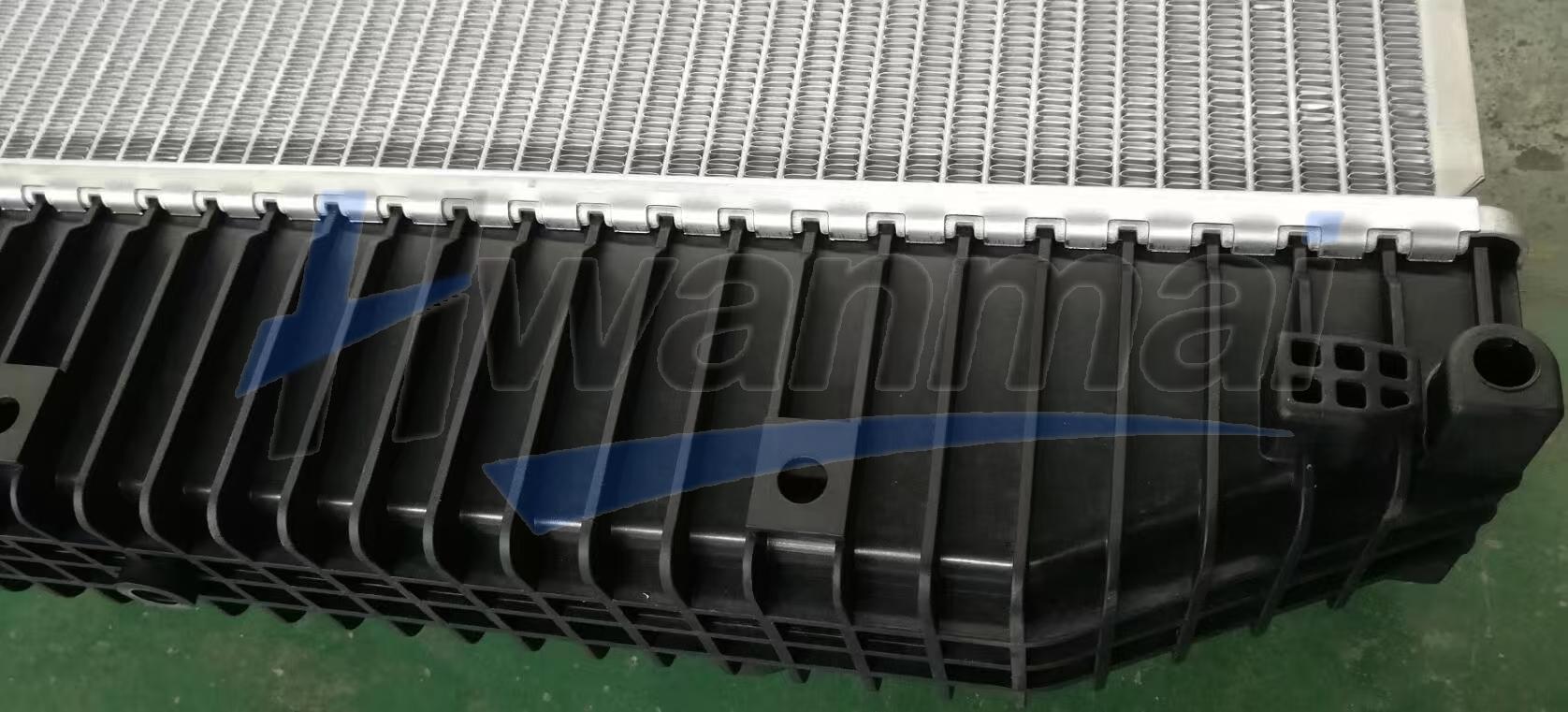
An aluminum-plastic radiator generally consists of an aluminum cooling core combined with plastic end tanks.
The aluminum core contains tubes and fins that provide the heat transfer surface. Plastic tanks are attached to the core to contain and distribute coolant.
This construction is widely used in automotive and commercial vehicle cooling applications.
Key characteristics include:
Aluminum heat exchanger core.
Reinforced plastic tanks.
Crimped tank-to-core connections.
Relatively lightweight construction.
Established aftermarket replacement applications.
Aluminum-plastic radiators are commonly selected for applications where the original vehicle cooling system uses this type of construction.
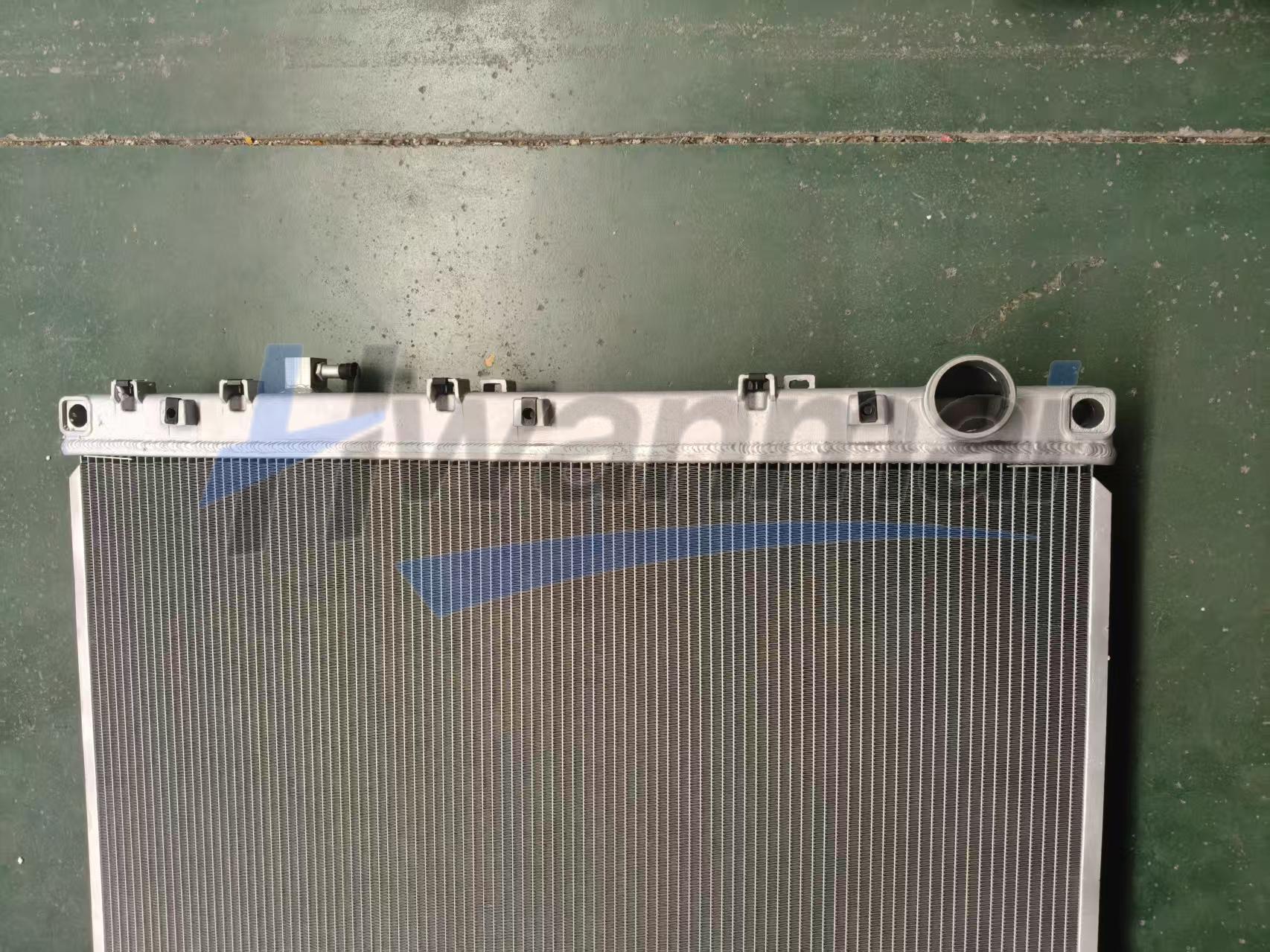
An all-aluminum radiator uses aluminum for the main radiator core and tank construction.
Depending on the design, the components are joined through controlled brazing or other suitable aluminum joining processes.
Key characteristics include:
Aluminum tubes and fins.
Aluminum tanks.
No conventional plastic end tanks.
Application-specific structural designs.
Potential suitability for specialized cooling requirements.
All-aluminum radiators are used in various passenger vehicle, commercial vehicle, and heavy duty applications.
| Comparison | Aluminum-Plastic | All-Aluminum |
|---|---|---|
| Core material | Aluminum | Aluminum |
| Tank material | Plastic | Aluminum |
| Construction | Crimped tank and core | Joined aluminum structure |
| Weight | Generally lightweight | Depends on design |
| Application | OEM-style replacement | OEM-style and specialized applications |
| Manufacturing | Core assembly and tank crimping | Aluminum fabrication and joining |
Neither construction is automatically better for every vehicle.
The correct choice depends on original equipment specifications, cooling requirements, operating conditions, and vehicle compatibility.
For heavy duty trucks, selection should be based on the specific vehicle and cooling system design.
Important considerations include:
Required cooling capacity.
Operating pressure.
Coolant compatibility.
Vibration resistance.
Mounting dimensions.
Tank and hose connection positions.
Service conditions.
A replacement radiator must match the vehicle's original requirements rather than being selected based only on its construction material.
For aftermarket distributors, both radiator types can represent valuable product categories.
Aluminum-plastic radiators may be important for established replacement applications, while all-aluminum designs can address specific vehicle models and technical requirements.
Maintaining a balanced product portfolio can help distributors serve different customer needs.
Aluminum-plastic and all-aluminum radiators each have their own construction characteristics and applications.
Understanding their differences helps buyers make informed purchasing decisions and build a more competitive heavy duty truck cooling product range.
Hwanmai supplies heavy duty truck radiator solutions in aluminum-plastic and all-aluminum constructions. Contact our team to discuss your vehicle applications and sourcing requirements.
Hwanmai passed IATF 16949:2016 certification iss
Explore the latest industrial news, manufacturin
Learn why newer Freightliner Cascadia applicatio
Contact: Kelvin
Phone: +86-17837873698
Tel: +86-17837873698
Email: kelvin@hwanmai.com
Add: Room 545, 5th Floor, Shandong Chamber of Commerce Building, Intersection of 7th Street and Anshun Road, Henan Province, China
We chat